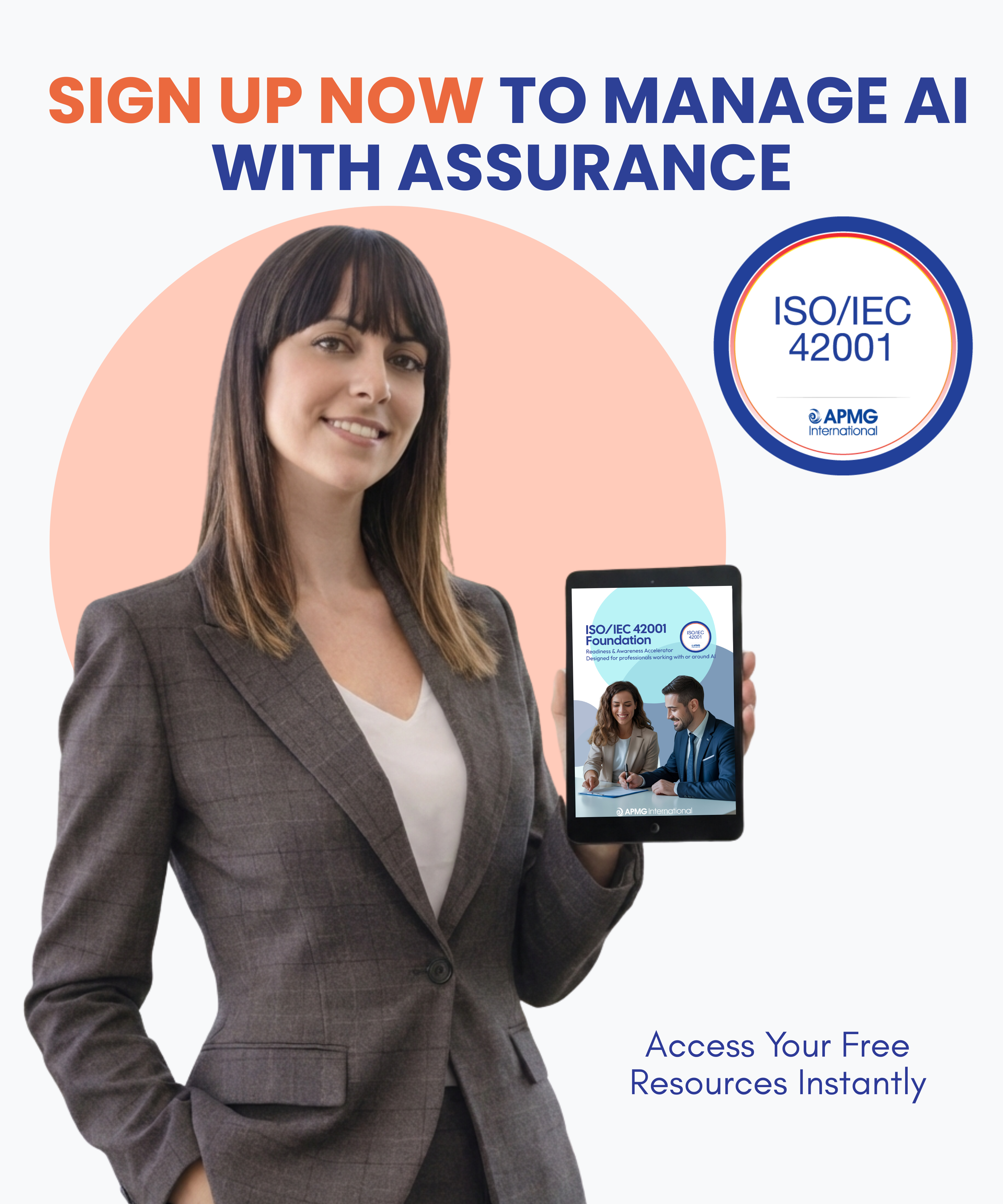
GET EXCLUSIVE ACCESS TO YOUR FREE READINESS & AWARENESS ACCELERATOR
Please find the accelerator waiting for you in your Downloads folder

Discover the ISO Standard Behind AI Management Systems
Artificial intelligence is already embedded across modern organisations. It supports decisions and automates processes. It influences outcomes as part of everyday business activity.
ISO/IEC 42001 (ISO 42K) responds to this reality by defining how organisations establish and operate an Artificial Intelligence Management System. ISO 42K sets out a consistent organisation-wide approach to managing AI as part of normal business operations.
What ISO 42K addresses
- Clear responsibility for how AI is used and overseen.
- Integration of AI management into existing organisational practices.
- A management system approach that supports continual improvement.
Why this approach matters
As AI use expands, informal practices become harder to sustain. ISO 42K provides a recognised and auditable way for organisations to move from fragmented AI adoption to a defined management system aligned with established ISO principles.
Why ISO 42K?
ISO 42K exists to help organisations manage artificial intelligence through a formal management system. As AI becomes part of normal business operations, organisations need a consistent and auditable way to define responsibility, apply controls, and support continual improvement.
Why ISO 42K matters now?
- AI use is becoming organisational, not experimental.
AI is already embedded across teams and core business activities.
- Responsibility for AI use is increasing.
Organisations are expected to show that AI is managed responsibly.
- Informal practices do not scale.
Inconsistent approaches create gaps in oversight and accountability.
- ISO 42K provides a recognised response.
It defines requirements for establishing and improving an AI management system.

Who is ISO 42K for?
ISO 42K is intended for organisations and professionals responsible for how artificial intelligence is managed at an organisational level. It supports those who need structure, oversight, and confidence as AI becomes part of everyday business operations.
Who is ISO 42K is designed for?
Organisations
- Leadership teams accountable for organisational AI use
This includes responsibility for how AI is planned, applied, and reviewed across the organisation.
- Risk, compliance, and assurance functions
These teams need clear evidence of oversight and consistency in AI-related activities.
- Organisations seeking credibility and competitive advantage
ISO 42K supports organisations that want to demonstrate compliance and remain trusted.
Professionals
- Practitioners involved in AI management systems
This includes professionals working with planning, operation, or improvement activities.
- Consultants and advisors supporting AI initiatives
These roles help organisations design, assess, or improve AI management practices.
- Professionals developing their career and expertise
ISO 42K helps individuals boost career prospects and validate their knowledge.

The ISO 42K Certification Pathway
The ISO 42K certification scheme is designed to build understanding progressively, starting with a clear and accessible entry point.
Foundation certification
The Foundation level introduces the core concepts, terminology, and requirements of ISO 42K. It provides a practical understanding of how an Artificial Intelligence Management System is structured and how it operates within an organisation.
This level is suitable for professionals and organisations who want a shared and recognised understanding of the standard. It supports those who are new to AI management systems, as well as those who already have experience and want to align their knowledge with ISO 42K.
Progression and next steps
After completing the Foundation level, learners can progress to advanced certifications as their role or responsibility develops. Higher levels focus on deeper application and implementation of AI management systems within organisations.
The pathway supports both individual capability building and organisational maturity.